






News
In theory, the signal supplied by the electricity grid has an impeccably sinusoidal shape with values that meet the specifications of the installations, equipment and devices it supplies. The reality is quite different: the electrical network is subject to numerous disturbances, including voltage fluctuations, which occur frequently and can cause considerable damage to loads, particularly more sensitive ones.
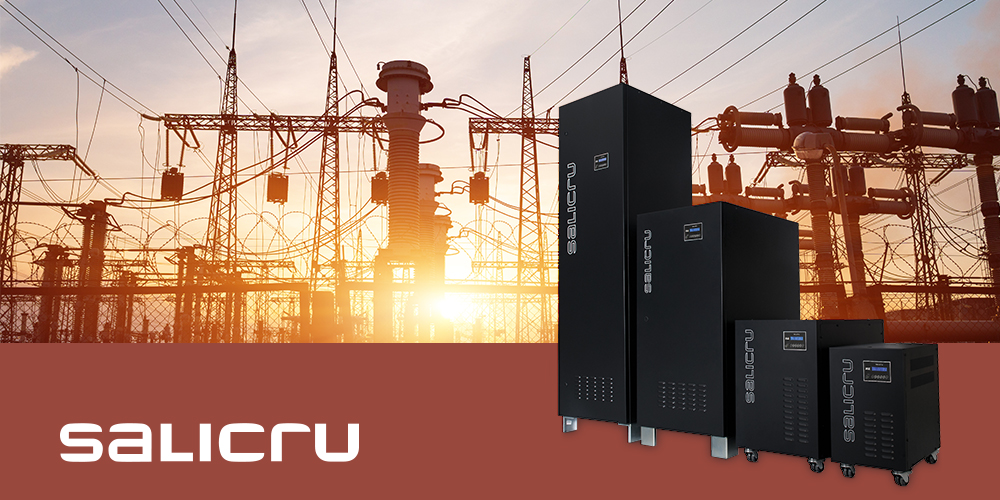
Electrical disturbances are diverse in nature and are addressed by the European standard EN 50160, which sets minimum quality requirements for low-voltage networks up to 150 kV. This standard specifies various characteristics that impact the root mean square (rms) voltage value, along with other aspects of the waveform.
The types of disturbances covered are extensive and include: fast voltage variations (flicker), voltage fluctuations due to load changes, temporary voltage dips, short power interruptions, voltage harmonics (distortions), transient imbalances, and overvoltages.
As you can see, the potential impacts on power signal quality are numerous and frequent, posing serious risks to companies and organisations in terms of both cost and reputation.
How to guarantee a stable voltage
Preventing this from happening is precisely the role played by devices such as Uninterruptible Power Supplies (UPS) and voltage stabilisers. Voltage stabilisers are specifically designed to provide a stable voltage, which is especially critical for loads that are sensitive to fluctuations. This protection is vital in highly sensitive applications, such as machine tools, medical equipment, lifts, production lines, and drives, as these systems often operate within a wide power range and have reactive profiles that make them particularly susceptible to voltage variations.
Depending on their cause, the duration of voltage variances can vary significantly, ranging from just a few milliseconds to several seconds, minutes, or even hours. These fluctuations can arise from various factors. Functional causes include the connection and disconnection of large loads from the grid, the startup of motors, or generator overvoltage. Additionally, they may result from inadequate regulation by the distributor or structural issues, such as improperly sized power lines.
In all of these cases, voltage stabilisers provide the most effective solution. Salicru’s catalogue, therefore, features two distinct series of stabilisers: RE3 and EMi3. RE3 stabilisers, available in single-phase and three-phase configuration with fully independent regulation to handle load imbalances. They also feature a static bypass to ensure continuity of supply in the event of a fault. The EMi3 series, on the other hand, uses a control circuit to implement the regulation so that the voltage is supplied to the booster transformer in series, either in phase or in phase opposition, to achieve the rated value of the output voltage. The RE3 series consists of electronic stabilisers ranging from 300 VA to 200 kVA, while the EMi3 series consists of servomotor stabilisers ranging from 5 kVA to 375 kVA.






 MONTAWEB.com