






News
Uninterruptible Power Supplies are crucial for protecting valuable assets from mains disturbances and power outages. They ensure the availability of a reliable, efficient and cost-effective power supply thanks to their high performance and low relative cost.
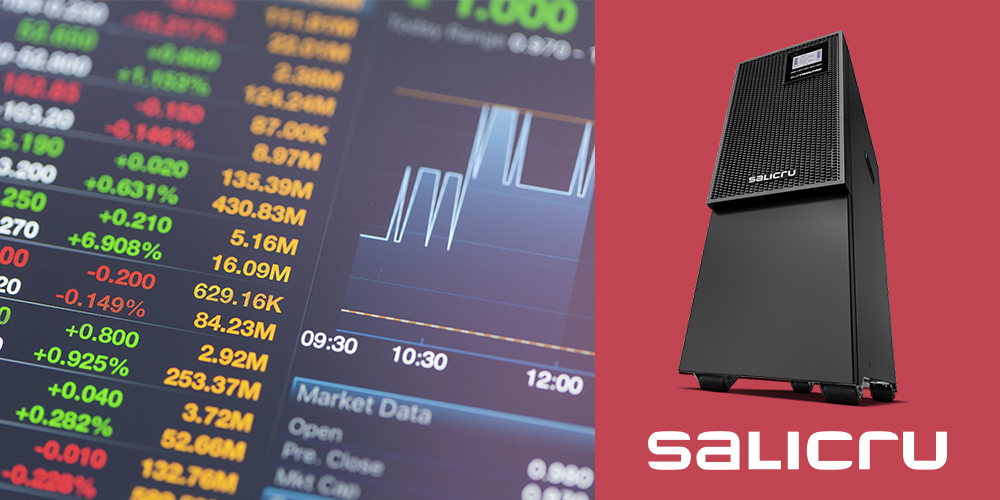
When it comes to protecting valuable assets, one sector that undoubtedly falls into this category is banking and financial activities. For many years now, economic activities and financial transactions have been conducted through networks, which, for obvious reasons, require a continuity of service that allows individuals, companies and public entities to carry out their daily activities without unwelcome interruptions.
The use of Uninterruptible Power Supplies in the banking environment is extremely diverse: from ATMs to bank branches and data centres, they play a vital role in protecting communications and data access.
Guaranteed Continuity
One of the primary objectives of UPS systems is to ensure operational continuity. When the power grid experiences reliability issues caused by outages or fluctuations, the system kicks in to provide the necessary backup. As a result, banking services, whether delivered via fixed or mobile networks, will continue to function. In connection with this, another objective of UPS systems is to minimise downtime in an industry that has to operate on a 24/7 basis. Customers will simply not tolerate any level of service disruption or appreciable delays, which means that the supply must be not only continuous but also immediately activated.
Electrical protection also plays a crucial role in preventing potential data loss while ensuring its integrity and averting the financial repercussions that can be disastrous both from a purely economic point of view and from a reputational perspective for the institution. While all businesses need to safeguard their reputation and brand, banks and financial institutions, in general, are particularly susceptible to attacks because they store highly sensitive information about the assets and transactions of customers whose identities must also be duly safeguarded.
Today, the growing threat from those looking to exploit digital systems calls for top-notch cybersecurity, which, in turn, relies heavily on UPS systems. Firewalls, intrusion detection systems and other security measures are fed through the devices where necessary to ensure they continue providing a permanent shield against malicious attacks.
Going forward, their use in the banking and financial sector looks set to expand through the increasing uptake of high-efficiency equipment intended to reduce energy consumption and operating costs. This trend is, in turn, related to a growing awareness of carbon emissions, leading to increased reliance on renewable energy sources such as solar and wind, which has the added benefit of reducing dependence on increasingly strained conventional power grids.
Implementing remote monitoring and management solutions is another important aspect since they facilitate real-time monitoring and proactive maintenance. Prevention is always preferable, even if you have a UPS ready to spring into action.






 MONTAWEB.com