






News
Renewable energy sources continue to set new records, both in Spain and worldwide, thanks to their competitive costs and a growing awareness of the need to reduce carbon emissions.
A clear indication of this growth can be seen in the data: in the first half of 2025, for the first time in history, more electricity was generated globally from renewable sources than from coal. Yet, while this is clearly a significant milestone for the energy transition, there's still a long way to go.
With respect to renewable sources, and focusing particularly on their growth in Spain, in early 2025, a turning point was reached: the installed solar power capacity surpassed that of wind power, establishing it as the leading technology in the electricity mix. One of the factors that can explain this development is the fact that consumers themselves, whether businesses, households or other entities, can now generate their own solar power. This is known as self-consumption.
Self-consumption is a very attractive option in principle, particularly as installation costs are decreasing, which shortens the payback period. When energy consumption exceeds generation, the additional supply is taken from the electricity grid. Conversely, if more energy is generated than consumed, the excess is fed back into the grid for financial compensation. An additional option is to incorporate batteries to store electricity.
Coordinated efficiency
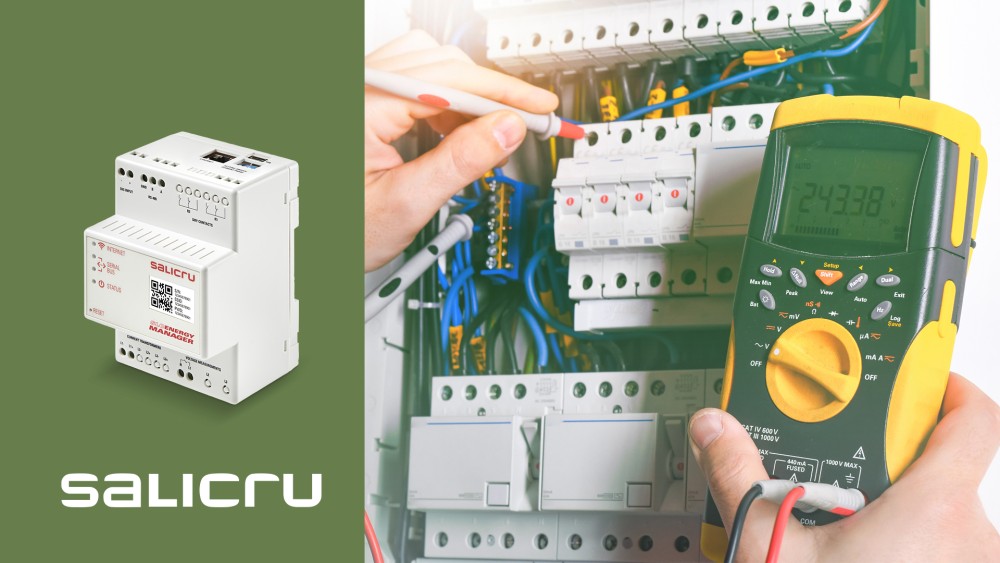
Although on paper the advantages are clear, self-consumption also presents some interrelated challenges that need to be addressed. For instance, all self-consumption setups must be efficient and properly balanced with the grid, and fortunately, both of these factors can be addressed through dynamic feed-in control, present in inverters and especially in integrated energy management systems.
The precarious nature of some grid installations is a problem that can manifest itself, for example, in the form of inverter line surges. Dynamic feed-in control, implemented through an additional device, regulates the energy fed into the grid at all times.
The advantages of this control method are immediate and diverse. Firstly, it boosts efficiency as it can yield up to 80% more energy, thereby improving profitability. Secondly, dynamic feed-in control ensures safety and stability by operating within a safe voltage range, which also extends the useful life of electronic devices.
As a result, dynamic feed-in control represents a significant step forward for solar installations in general and for self-consumption installations in particular. The interconnection of a diverse range of generation sources within the electricity mix (solar, wind, hydro, nuclear, combined cycle, and others) has greatly heightened the complexity of the electricity grid. In the case of solar energy in particular, the challenge of intermittency is compounded by the challenge of dealing with the rapid growth in supply from both solar farms and the self-consumption segment.
Solar energy is paving the way for a more decentralised system of electricity generation, which is great news. However, we must ensure that this does not jeopardise the stability of the grid, and dynamic control offers an optimal solution for energy managers seeking to prevent uncontrolled feed-in and achieve progressive optimisation and automation.




 MONTAWEB.com