




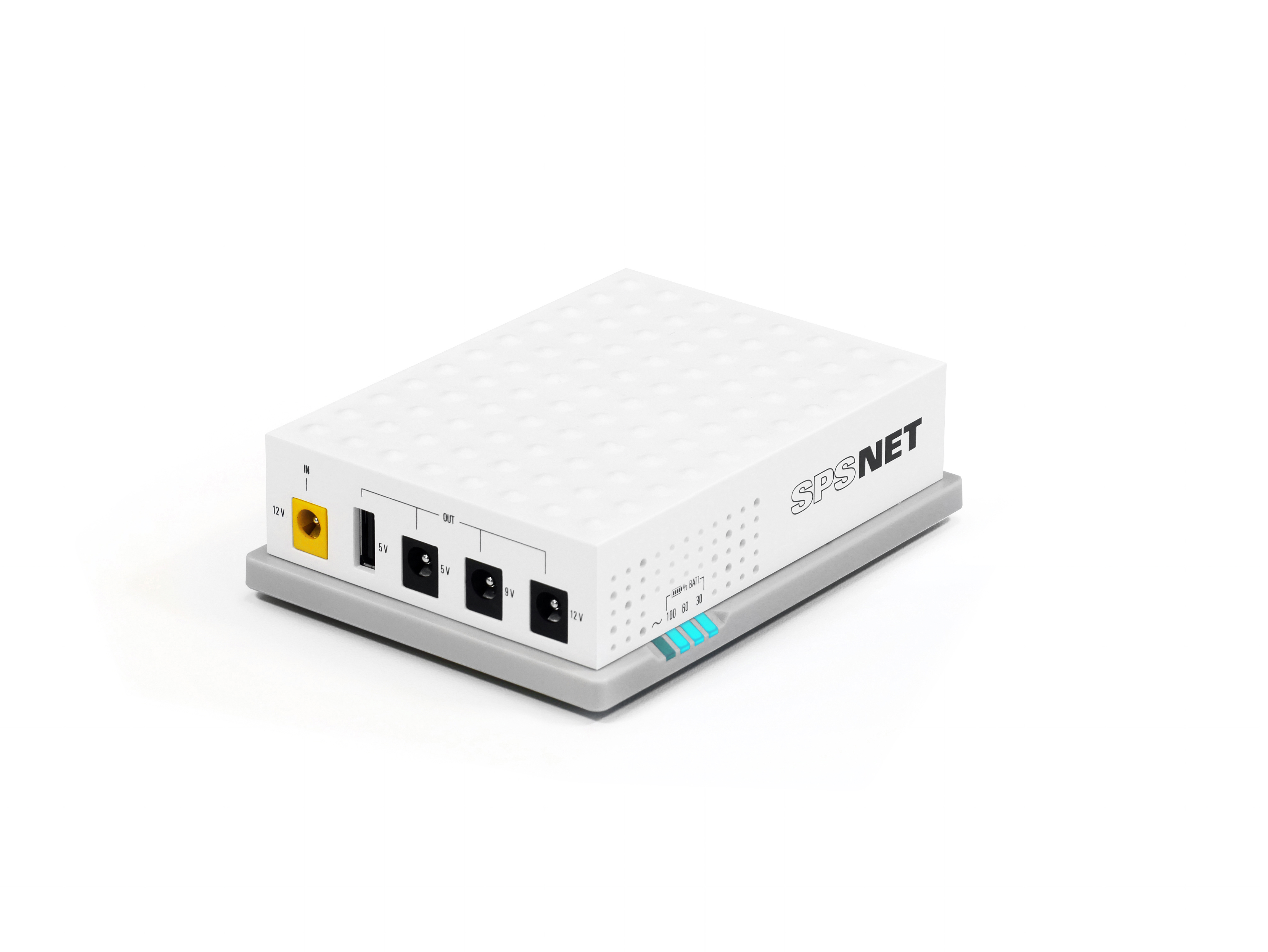


The electrical network must behave as an ideal source of voltage without any internal impedance, with sinusoidal output and constant voltage at all points of the power supply.

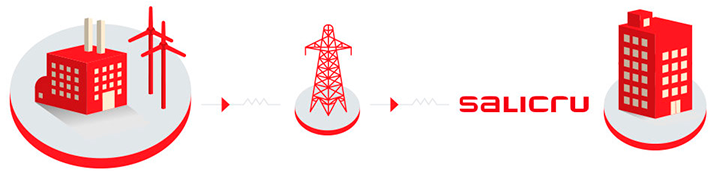
In practice, we see that these conditions do not always apply, basically due to two types of causes, internal and external.
Generators and the distribution system have a certain internal impedance, which causes voltage collapses and losses in the distribution system.
The loads absorb:
- transitory currents (start-ups and load connections)
- non-sinusoidal currents (non-lineal loads)
Sometimes the causes for the disturbances are external: atmospheric, all of which contribute negatively to the quality of the power supply.
This type of disturbance causes:
- An increase loss thus causing lower performance.
- Electromagnetic compatibility problems (EMC): poor operation or untimely stoppages to the system and cause significant efficiency losses to production systems.
The main parameters which may be altered by a disturbance include (as defined under standard EN 50.160):
- Frequency
- Amplitude: temporal, power surges, sub voltages, etc.
- Form of the Wave: harmonic
- Symmetry of the triphasic system
In the last few years, there has been great advances in the minimization of the effects of network disturbances on equipment supplied by them.
Especially in Europe, the required compliance with the European Community Electromagnetic Compatibility Directive, has meant a substantial improvement in the two aspects of disturbances:
- On the one hand, the limitation of the conducive and radiated transmitters from the disturbing apparatus, although those due to Telecommunication Transmitters, Atmospheric Discharges and the Exploitation of Commercial Networks continue to exist.
- On the other hand, the reduction in susceptibility of the equipment to the disturbances.
Despite the improvements, there will always be disturbances which cause failures and/or breakdown in equipment. What follows is a list of the most common effects.
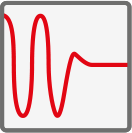
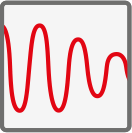
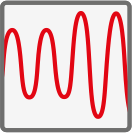
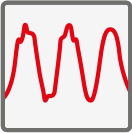

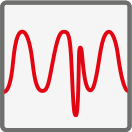
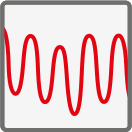
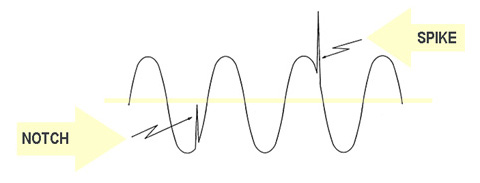
Spikes and Notches
Two types:
- Those produced by induction of atmospheric discharges (lightning) to airlines
- Those produced by abrupt variations in the load current, connections-disconnections of inductive or capacitative loads
Effect: When they pass the anticipated limits, they produce break-downs in the isolations and semiconductors.
.jpg)
Dropouts
These are deep or total collapses, lasting a few milliseconds. There are two different causes:
- Short-circuits at the point of consumption, freed later by the corresponding protection.
- Interruptions in the supply produced by the commutation of lines and discharge of protective devices with automatic pickup.
Effect: In equipment with memory or logical functions, a power outage (even if it lasts just a short time) often cause functional failures. IT equipment in general is very sensitive to these disturbances, which can cause an incalculable loss of information.
.jpg)
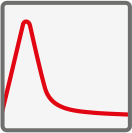
Over Voltages: Temporary (Surges) / Long-Lasting
Short/long-term over voltages due to a load reduction on networks with mediocre regulation (high impedance).
Effect: they cause several problems to all kinds of equipment and installations.
- In lighting installations, they reduce the life of the bulbs
- In IT equipment, they produce failures in the power supply and monitors
.jpg)
Sub-Voltages: Temporary (sags)/Long-Lasting
These are short-term voltage collapses due to momentary or permanent overloads on the network.
Effect:
- Motor-driven induction machines reduce their speed and increase consumption
- The lighting installations with discharge lamps have dark spots
- System stoppages upon entering the minimum voltage work station
.jpg)
Gradual and prolonged sub voltages (Brownout)
A progressive collapse for various seconds, which often ends in a total supply failure. These are produced when there are strong disturbances in the exploitation of the networks and central energy producers. (Lack of power, loss of synchronism, etc.).
Effect: same consequences as an outage or dropout.
.jpg)
Failed Power Supply (Blackout)
A complete failure, generally due to the untimely activations of a distribution network protection device.
Effect: The power outages inevitably stop the equipment unless they possess their own exterior independent energy system.
But when the stoppage is produced in an untimely way, dangerous situations can come about as far as the safety of people and things, or also the loss of very valuable information (as is the case of IT equipment).
.jpg)
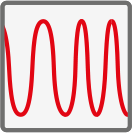
Current and/or voltage harmonics
Certain receivers consume non-lineal loads, that is, harmonic currents. These currents produce harmonic voltage collapses which modify the sinusoidal voltage wave originally produced (in the power station alternators).
.jpg)
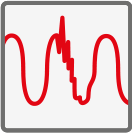
Highly frequent disturbances
These are high frequency signals that superimpose the power supply voltage. They may consist of any defined frequency or broad band signal; stationary, flashes or repetitive impulses.
They are the result of undesirable couplings to the commercial network lines with apparatus that use high frequency technology or commutation. According to the type of coupling, they can take on a common mode or differential mode form.
Effect: These disturbances can cause all kinds of equipment failures: from operational failures to permanent damage.
.jpg)
Frequency Variations
The interconnected continental commercial networks (as is the case with most of the European ones) supply an almost invariable frequency which is very close to nominal frequency. This is because it is controlled through a mega-system which includes a very large number of synchronized machines, with an enormous overall strength and an almost infinite inertia.
On the contrary, on many islands and in other isolated areas or at independent installations with small electrical stations (or electrogen groups) substantial frequency variations are often produced. The variations are practically inevitable when there are connections or disconnections of comparable strength to the total strength of the system.




 MONTAWEB.com