




We live in the Information Age, which has been made possible by the digitisation of an enormous amount of data. During the early stages, this data was stored on local systems, i.e. on the internal or external storage units of computer equipment. This was already a breakthrough compared to previous eras, but it has evolved exponentially thanks to the interconnection of computers via the Internet and the possibility of cloud storage.
This approach, which consists of outsourcing the storage of information to third parties, is based on data centres whose resources are contracted by users. The importance of this approach is evident from the enormous turnover of data centres, with more than 200 billion dollars earmarked for their construction in 2021. From an energy point of view, some of these facilities contain tens of thousands of devices with power ratings in excess of 100 MW, which is equivalent to the needs of a city of around 100,000 inhabitants.
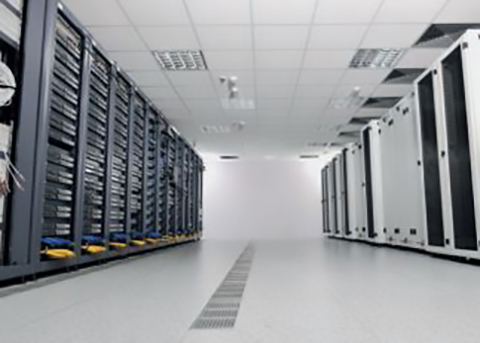
Data centres, and information storage in general, are therefore of critical importance to our society and economy, as well as to our environment. This is why the reliable and continuous supply of these infrastructures is essential.
It is no coincidence that 50 % of information losses are due to interruptions and disturbances in the power supply. This requires the use of uninterruptible power supply (UPS) systems that guarantee the availability of energy in these environments, ensuring functionality at all times by preventing the negative consequences of phenomena such as transient bursts, outages and micro-outages, undervoltages and voltage dips, transient and permanent overvoltages, harmonics, transient voltage variations, voltage oscillations and frequency fluctuations. All these disturbances can affect devices, with considerable and sometimes irreversible costs and damage.
Environmental awareness must also result in high levels of energy efficiency and the use of recyclable materials in the construction of UPSs. Only in this way, through energy-efficient operating modes and by prioritising the supply of the most critical loads, can two ambitious goals be achieved, to ensure both a reliable and optimal power supply.


 MONTAWEB.com