






News
In the vast majority of cases, solar and wind farms are located in rural areas, often on agricultural land. Considering this, the question arises as to how the farming community can take advantage of these energy sector developments, especially given the pressure to lower overall energy consumption, as 5% of energy use in Spain is linked to agricultural activities, and this proportion is expected to rise due to the growth in irrigated land.
Energy saving and efficiency measures in agriculture include several lines of action, among them the modernisation of agricultural machinery, which, according to the government’s Instituto para la Diversificación y el Ahorro de la Energía (Institute for Energy Diversification and Saving) accounts for more than 45% of the sector’s energy consumption.
Twofold savings in irrigation
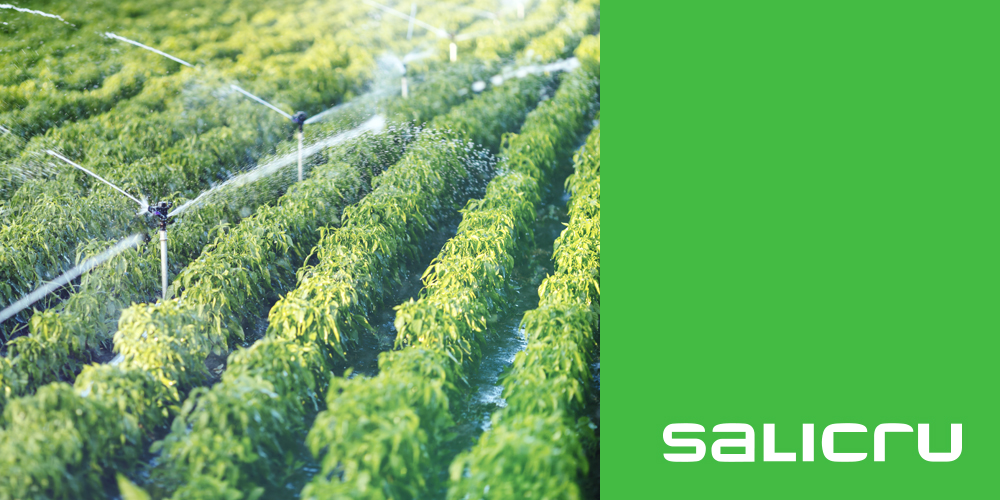
The other notable aspect in terms of its relative contribution to total energy consumption is irrigation systems, where the savings are twofold as they also include savings in water usage, which, although always relevant, are especially important today due to the persistent drought that has affected the east and south of the Iberian Peninsula over the last few years and the constant threat of climate change.
In this context, manufacturers like Salicru are developing efficient and imaginative solutions in the form of variable frequency drives and solar pumping cabinets.
The CV30-PV is a variable frequency drive that uses the energy captured by solar panels to extract water from the ground, which can either be stored in tanks or ponds for later use or be used for immediate irrigation, depending on the requirements. The drive does this by transforming the direct current supplied by the panels into an alternating current that feeds the submersible pump through a process that does not pollute or generate any noise, making it an environmentally friendly solution.
The drive can be incorporated into the complete ACV30-PV solar pumping solution, which also includes the BOOST MOD-320-PV booster module to reduce the number of panels required. In other words, it improves the energy efficiency of agricultural irrigation and, depending on the model chosen, can be used for stand-alone systems powered solely by solar panels with the possibility of switching to generators or the mains.
These two examples prove that it is indeed possible to make progress in saving energy and decreasing CO₂ emissions while simultaneously enhancing the competitiveness of agricultural enterprises. Additional initiatives, such as improving greenhouse insulation and climate control, employing fertilisers efficiently and promoting precision farming are also helping to make agriculture more sustainable while concurrently reducing costs, optimising productivity, and protecting the environment.






 MONTAWEB.com