






News
Monitoring is crucial for understanding the status of all types of devices, allowing us to ensure they are functioning correctly and consequently improving their reliability. By observing, recording, and analysing key equipment parameters in real time, we can anticipate potential failures and optimise performance.
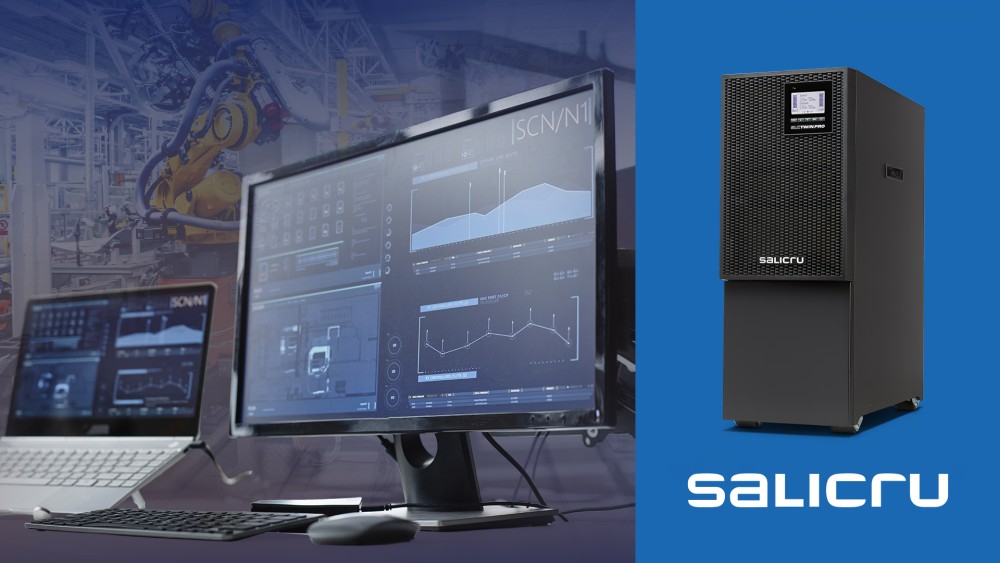
Good monitoring not only detects incidents as they happen; it also recognises the crucial role of prevention. The advanced processing of data related to consumption, temperature, and electrical parameters, among others, allows us to deduce patterns that serve as indicators of abnormal operation. These indicators can help maintenance personnel respond more quickly, preventing breakdowns and performance loss along with the resulting consequences for uptime, costs, reputation, and safety.
The case of Uninterruptible Power Supplies (UPS)
Uninterruptible power supplies (UPS) have been offering built-in monitoring, remote management, and incident alert functions for years, owing to the importance of monitoring the status of these critical devices, which are tasked with ensuring a continuous and high-quality power supply. A more recent development is that they now leverage advanced technologies to apply the principles of predictive maintenance.
A modern UPS communicates its key parameters as data that can then be processed and analysed using tools such as artificial intelligence (AI). This advanced AI analysis enables the identification of abnormal UPS behaviour in areas such as reduced battery capacity, which in turn reduces the equipment's autonomy. It also detects voltage fluctuations and other disturbances that could trigger faults in sensitive electronic components, as well as abnormal temperature increases that shorten their useful life.
The aim of this high-level monitoring is to generate preventive alerts that anticipate breakdowns. It is, therefore, a proactive approach that, rather than relying on traditional inspections at fixed intervals, seeks to predict the potential emergence of problems through advanced modelling. A typical example of this would be the optimisation of battery replacement cycles.
The cloud is a another element that plays an important role in this advanced monitoring and state-of-the-art predictive maintenance. Uploading data to the cloud using telemetry provides maintenance teams with 24/7 visibility, which is particularly valuable when monitoring a large number of devices spread across multiple locations.
Advanced and predictive maintenance using AI also works well with modular and scalable UPS systems, as it adapts to the potential expansion of the electrical protection infrastructure provided by these devices. As a result, reliability and management can be guaranteed and facilitated at all times, even when significant changes are implemented.
These advantages are particularly important in critical infrastructures, which, until recently, primarily consisted of hospitals, transportation systems, and power stations. Nowadays, however, as the backbone of the daily activities conducted by businesses, public administrations, organisations, and consumers, we also include data centres on the list of critical infrastructures.





 MONTAWEB.com