




News
Their potential is particularly significant in installations with pumps, fans and other motors that run for many hours or operate under variable loads. Key benefits include lower energy consumption and a longer service life for electric motors, helping to reduce costs.
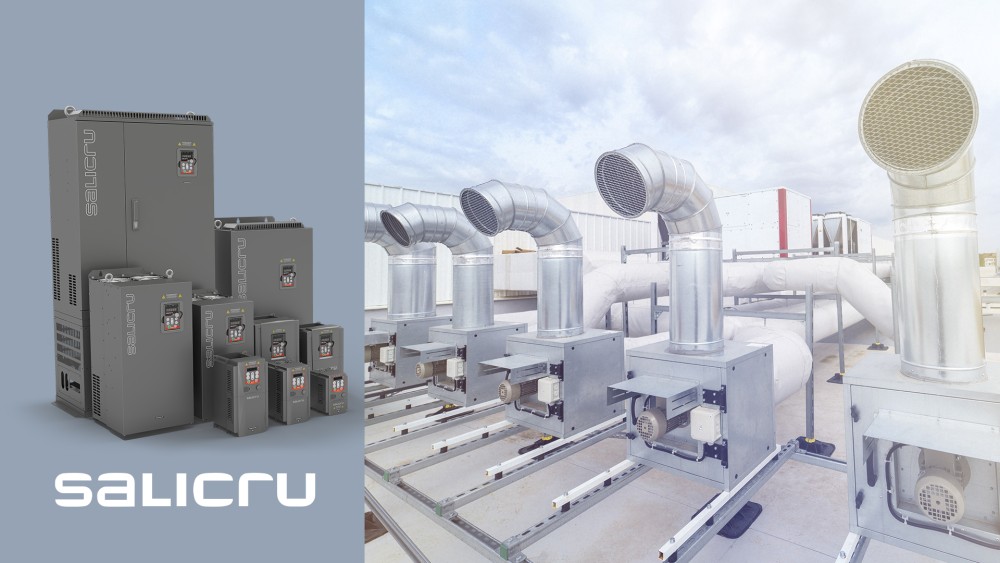
Electric motors are used in industry, buildings and many services. The European Commission estimates that they account for around 50% of global electricity consumption. In the European Union, the 380 million motors covered by ecodesign regulations consumed 1,326 TWh in 2020, representing 53% of the electricity used in the EU-27 that year. Although this latter figure relates to a specific year, both figures help illustrate the significant share of electricity demand accounted for by motors.
A variable frequency drive regulates the power supplied to a motor to adapt its speed and torque to the requirements of each application. Instead of running at a constant speed and controlling flow or pressure by other means, the system can respond to changes in demand. This regulation can reduce energy consumption, particularly in pumps and fans whose operation varies throughout the day.
Saving energy and protecting equipment
Potential savings depend on the conditions of each installation: the load profile, operating hours, existing control system and electricity price. For this reason, it is advisable to calculate the return on investment using real operating data.
The economic benefit may also include reduced mechanical wear. By controlling acceleration and deceleration ramps, the drive reduces the stresses associated with sudden changes in speed. This can help extend the service life of connected equipment and reduce some maintenance work.
Precise speed and torque control allows the machine to be adjusted to the process. In manufacturing, drives can be used with conveyor belts, dosing systems and mixers. In buildings, they regulate pumps and fans according to heating, ventilation and air conditioning requirements. In water treatment plants, they help adjust pumps and blowers to operating conditions.
Solar pumping is another application. Energy from the panels powers the drive, which controls the pump used to extract water for irrigation or to store it in tanks. The equipment must be selected and configured with the characteristics of the motor and installation in mind.
An investment that depends on the application
Not all installations offer the same savings potential. A preliminary assessment should consider how demand varies, how long the motor runs and which control method is used. Installation and maintenance costs should also be taken into account, as well as the potential impact of downtime on operations.
Monitoring and communication functions available in some equipment make it possible to check its status and support diagnostics. Depending on the installation, this information can help with maintenance planning and allow issues to be identified more quickly.
Salicru’s Controlvit family includes drives for asynchronous motors from 0.2 kW to 500 kW. The choice of model depends on power, load type, operating conditions and control requirements.
When a motor runs for many hours and its demand changes, regulating its speed can be a worthwhile measure. Energy savings, process control and the potential reduction in wear provide a practical basis for assessing the investment.





 MONTAWEB.com