


News
Variable frequency drives can be particularly valuable in installations that use pumps, fans and other motors that run for extended periods or under variable loads. One of their key advantages is the ability to increase the service life of electric motors, which in turn helps reduce costs.
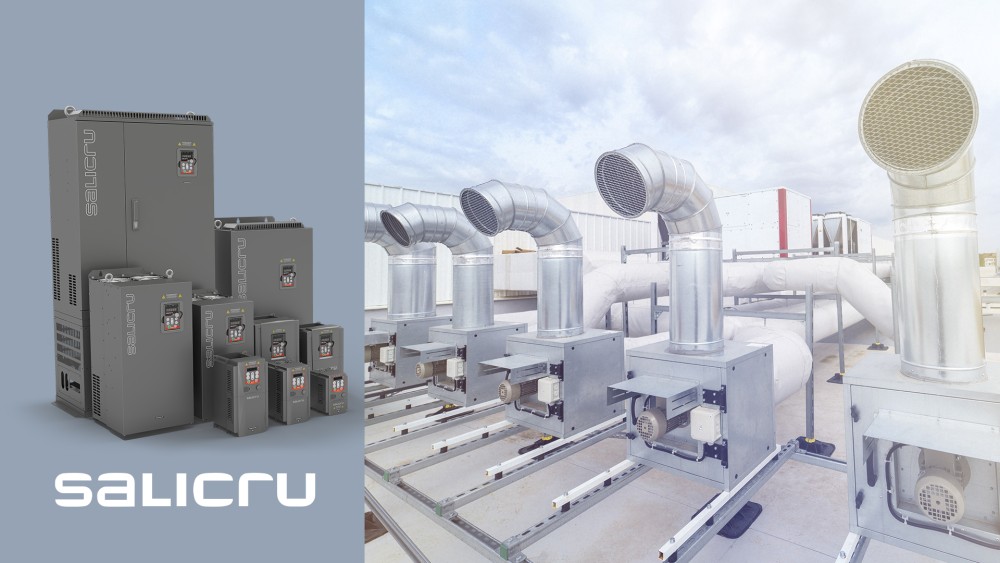
Electric motors are used in industry, buildings and countless other services. The European Commission estimates that they account for around 50% of global electricity consumption. In the European Union, the 380 million motors covered by the Ecodesign Directive consumed 1,326 TWh in 2020, accounting for 53% of all the electricity consumed in the EU-27 that year. Although this last figure relates to a specific year, taken together, these two statistics leave little doubt as to the extent to which motors contribute to electricity demand.
Variable frequency drives regulate the power supplied to a motor, adapting its speed and torque to the requirements of a given application. Rather than maintaining a constant speed and regulating flow or pressure by other means, they can respond to changes in demand. This control can reduce energy consumption, particularly for pumps and fans in installations where the operating conditions vary throughout the day.
Cost savings and reduced wear and tear on equipment
Given that the potential savings depend on the specificities of the installation, such as its load profile, operating hours, existing control system and electricity price, the return on investment should be calculated using real operating data.
Further financial benefits may be gained from reduced mechanical wear and tear because, by controlling the start-up and stop ramps, the drive reduces the stresses associated with sudden changes in speed, and this can help extend the service life of the connected equipment and reduce the need for some maintenance tasks.
This precise control of speed and torque makes variable frequency drives suitable for a range of processes. In manufacturing, they can be used with motors that run conveyor belts, dosing units and mixers. In buildings, they help regulate pumps and fans to meet climate control requirements, and in water treatment plants, they help tailor pumps and blowers to operating conditions.
Variable frequency drives are also used in solar pumping systems. The energy from the solar panels powers the variable frequency drive, which in turn controls the pump that extracts water for irrigation or stores it in tanks. Given this broad range of applications, when selecting and configuring the equipment, it’s important to consider the characteristics of both the motor and the installation.
A unique investment for each situation
Not all installations offer the same potential for savings. A preliminary analysis should assess how demand varies, how long the motor runs and which control method is currently used. It’s also advisable to consider the installation and maintenance costs, as well as the potential impact of downtime on operations.
The monitoring and communication functions available on some drives allow you to check its status and aid diagnosis. Depending on the installation, this information can help with maintenance planning and speed up fault detection.
Salicru’s Controlvit range includes variable frequency drives for asynchronous motors from 0.2 kW to 500 kW. Which model to choose depends on the power rating, the type of load, the operating conditions and the control requirements.
When a motor operates for long periods and handles variable loads, regulating its speed can be a cost-effective strategy that results in energy savings, improved process control and potential reductions in wear and tear, benefits that serve as a good starting point for evaluating the initial investment.






 MONTAWEB.com