






A transformer transfers electrical energy between two or more circuits by means of electromagnetic induction. It is essential in the transmission and distribution of electrical power, as it allows the alternating current (AC) voltage to be increased or decreased according to the needs of the application to which it is connected. In both industrial and domestic settings, they adjust the voltage to ensure the efficient operation of electrical equipment and devices.
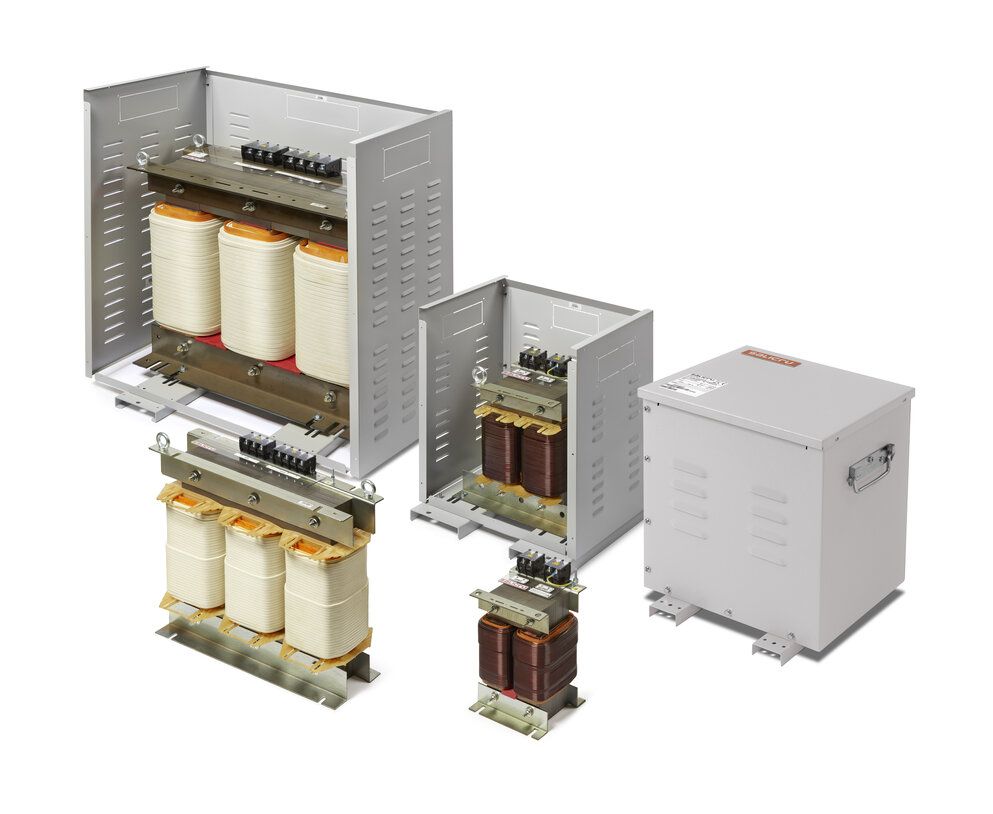
A transformer is primarily composed of two insulated wire coils, known as primary and secondary windings, which are wrapped around a laminated iron core. The primary winding is connected to the electrical power source, while the secondary winding supplies the transformed power to the load. The iron core provides a low magnetic resistance path for the flow of current and helps to increase the efficiency of the transformer.
The workings of a transformer are based on the principles of electromagnetic induction: when an alternating voltage is applied to the primary winding, a variable magnetic flux is generated in the iron core, which in turn induces a voltage in the secondary winding. The ratio between the number of turns in the primary and secondary winding determines the ratio between the input and output voltage. This known as the transformation ratio. By adjusting the number of turns in each winding, you can increase or decrease the output voltage as needed.
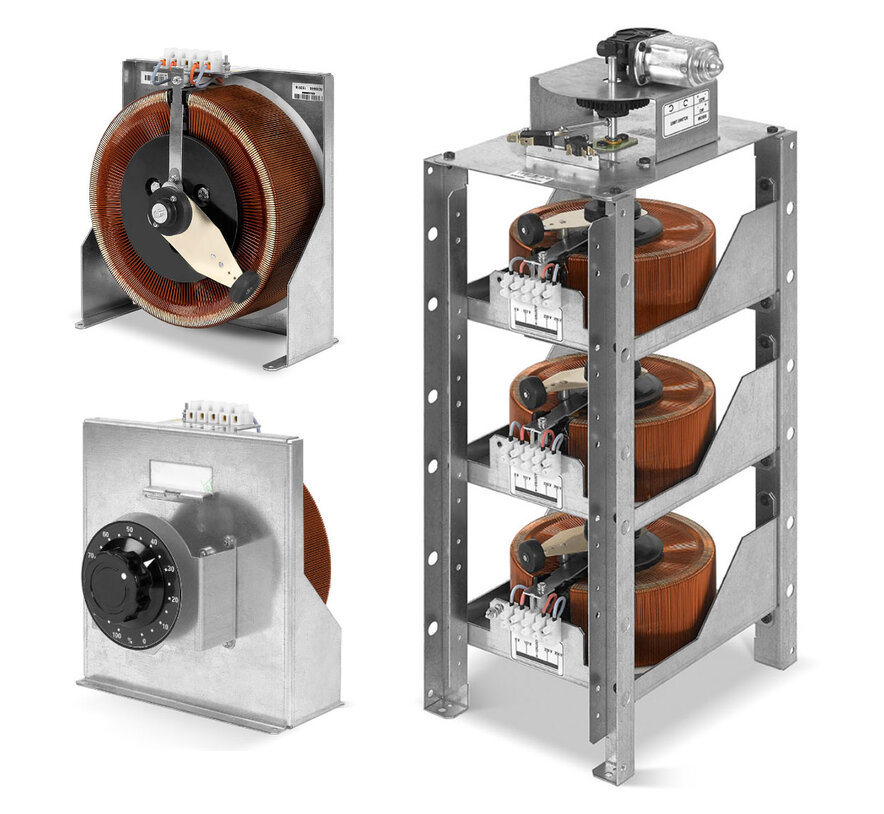
An autotransformer is a special type of transformer that shares a part of its winding between the two sides, unlike conventional transformers, whose primary and secondary windings are completely separate. As a result, autotransformers are more compact and lightweight than conventional transformers but achieve the same transformation ratio.
Like conventional transformers, they are composed primarily of a laminated iron core and at least two terminal connections for the primary and secondary windings. By sharing part of the winding, autotransformers have fewer wire turns and are more efficient in terms of space and weight.
They work similarly to a conventional transformer in terms of the principles of electromagnetic induction. The difference is that when a voltage is applied to the primary winding, part of it is induced in the secondary winding through the magnetic coupling between them. The transformation ratio is determined by the number of turns shared between the two windings.

They are used in power plants and substations to raise or lower the voltage of the generated electrical energy before it is transmitted over long distances through transmission lines.

Autotransformers and transformers adjust the electricity voltage before it is distributed to homes, commercial buildings and industrial facilities.

In wind farms and solar plants, they connect wind generators or solar panels to the grid, adjusting the generated energy to the voltage and frequency of the grid for distribution.

They are used in various industrial applications, including welding equipment, heavy machinery and motor control systems.

In high-speed trains or metro lines, transformers are needed to power electric traction engines and provide power to the auxiliary systems.

Transformers provide the energy needed to power drilling equipment, pumping and ventilation systems and other high-power electrical apparatus.

In industrial or outdoor applications, they may be needed to adjust the voltage for high-power lighting fixtures such as those used in stadiums, airports or construction areas.

In large commercial or residential buildings, transformers may be used to adjust the voltage for air conditioning, heating and ventilation systems.

Used on board ships and boats to provide the energy needed for electric propulsion and power navigational, communications and lighting systems.

The partnership between AES Ltd and Salicru represents a success story in the Irish power electronics market, and also demonstrates how a long-lasting and efficient commercial relationship can help a company become a benchmark in its sector.
.jpg)
The data centre in Sant Cugat del Vallès (Barcelona) has a total power of 4 MW with capabilities to expand up to 8 MW. A total of six SLC ADAPT2 units are currently providing power backup for all the IT infrastructure and ancillary services at the site.

This project further strengthens Salicru’s position as a leader in energy solutions and reinforces its standing in the railway market. As part of a commitment to innovation and safety, Salicru has been selected to install devices in all interlockings not yet equipped with modular Uninterruptible Power Supply Systems (UPS).


 MONTAWEB.com